
Summary
This briefing explains 10 key implications of the International Court of Justice’s landmark judgment ruling Myanmar responsible for genocide against the Rohingya, rejecting the military’s explanations for the violence, and ordering reforms, reparations, and measures for return.
Jump to:
The International Court of Justice’s final judgment of 19 November ruled that Myanmar was responsible for genocide against the Rohingya. The 186-page judgment contains 10 findings and orders that are important for human rights in Myanmar and beyond.
1. Myanmar is first State found responsible for committing genocide
The Court ruled that Myanmar committed genocide against the Rohingya in northern Rakhine State, in violation of its obligations under the Genocide Convention (paras. 467–469). “Myanmar” refers to the State and its organs, including the military and government authorities, rather than the population of Myanmar as a whole.
It ruled that Myanmar was responsible for genocidal acts intended to destroy the Rohingya, including killings, causing serious bodily and mental harm, and imposing measures intended to prevent births within the group. The judgment refers to an estimated 10,000 killed, including between 730 and 2,109 children, and at least 1,834 subjected to rape or gang rape as part of its assessment of the evidence (paras. 418, 420, 422, 429, 467–469).
This is one of the most significant judgments in the Court’s history. It is the first ever to find a State responsible for committinggenocide. Previous judgments had only found States responsible for failing to prevent and punish genocide. It places genocide, rather than simply mass human rights violations, at the centre of Myanmar’s historical and legal record.
2. Myanmar intended to commit genocide
The Court ruled that the evidence supported only one reasonable conclusion: that Myanmar intended to destroy a substantial part of the Rohingya population (para. 467).
In reaching this conclusion, the Court relied on evidence including the longstanding denial of citizenship and civil rights, restrictions on freedom of movement, employment, education, healthcare, marriage, and childbirth, as well as coordinated anti-Rohingya propaganda (paras. 400–404).
Proving genocidal intent is considerably more difficult than proving other criminal intent. The Court’s conclusion that the destruction of part of the Rohingya group was the only reasonable conclusion to be drawn from the evidence is therefore one of the judgment’s most important findings.
3. Myanmar’s explanations of what happened were rejected
In ruling that genocide had occurred, the Court rejected the explanations offered by Myanmar:
- Myanmar argued that it was conducting legitimate counter-insurgency operations against ARSA. However, the Court found that the military failed to distinguish civilians from fighters and that the scale of the killings and destruction in “clearance operations” far exceeded military necessity (paras. 451–453).
- Myanmar argued that it was merely forcing people from the area. However, the Court found that if this had been the objective, civilians would have been protected during flight. Instead, Rohingya civilians faced landmines, attacks while fleeing, and the destruction of their villages (paras. 454–462).
- Myanmar argued that the operations were punishment for ARSA attacks, but did not explain what “punishment” meant. The Court found that the scale and brutality of the violence, particularly against women and children, went far beyond any notion of collective punishment (paras. 420–422, 463–466).
The judgment therefore rejects the narrative that has been used for nearly a decade to justify what happened in northern Rakhine State.
4. Rohingya recognised as a protected ethnic group
The Court recognised the Rohingya as an ethnic group protected under the Genocide Convention. Recognition was based on the distinct culture, language, and institutions of the self-defined Rohingya (para. 310).
The Court ruled that the genocide could not be separated from decades of discrimination against the Rohingya. It highlighted discriminatory laws and policies, as well as anti-Rohingya rhetoric, including statements by Min Aung Hlaing and coordinated online campaigns linked to the military (paras. 399–404, 436).
For decades, Rohingya identity has been denied or delegitimised by successive authorities. The judgment therefore represents the strongest international judicial recognition of the Rohingya as a distinct people entitled to protection under international law.
5. Sexual violence and violence against children were central to genocide
The Court found extensive evidence of rape, gang rape, and other forms of sexual violence committed against Rohingya women and girls (paras. 418–420). It also found evidence of widespread killings and abuse of children, noting that some of the youngest Rohingya were among those deliberately targeted (paras. 421–422).
Together with restrictions on marriage and childbirth, sexual violence helped establish that Myanmar imposed measures intended to prevent Rohingya births, one of the acts specifically prohibited by the Genocide Convention (paras. 370, 401, 418, 468–469).
The judgment therefore recognises harms suffered by women and children as central components of the genocide itself, not merely associated abuses.
6. Myanmar failed to prevent, investigate, and punish genocide
The Court ruled that Myanmar failed to fulfil several obligations under the Genocide Convention. It ruled that Myanmar breached its duty to prevent genocidal acts committed by non-Rohingya civilians who participated in attacks alongside security forces, despite having the means to restrain them (paras. 481–488).
The Court also ruled that Myanmar failed to properly investigate and punish genocide. It criticised the 2017 Inquiry Board, 2020 Independent Commission of Enquiry, and 2020 Criminal Investigation and Prosecution Body, and found that domestic court efforts were inadequate (paras. 535–554). For instance, the few individual soldiers convicted for the Inn Din massacre were pardoned after just eight months.
The Court rejected Myanmar’s attempts to rely on military structures or constitutional arrangements to justify impunity, and confirmed that responsibility extends to military superiors and commanders (paras. 522–524). The judgment therefore establishes a clear agenda for future legal reform.
Finally, the Court ruled that Myanmar did not prohibit genocide in domestic law, and the legal amendments adopted after the Provisional Measures Order (2020) remained insufficient (paras. 562-574). For instance, the criminalisation of measures intended to prevent births included a significant loophole.
7. Investigators obstructed and evidence destroyed
The Court ruled that Myanmar violated the Provisional Measures Order (2020) requiring the preservation of evidence. It found that Rohingya village sites had been destroyed and security facilities built on former village land, altering or destroying potential crime scenes (paras. 641–642).
The Court also recorded that Myanmar denied United Nations investigators access to evidence and witnesses and failed to respond to requests for information from international investigative bodies (paras. 76, 128, 131). Recognising these obstacles, it relied on circumstantial evidence and reasonable inferences drawn from the overall record to establish genocide and genocidal intent (paras. 130–131, 467, 553).
This confirms long-standing concerns raised by human rights organisations that efforts to conceal evidence and obstruct investigations should not prevent accountability.
8. Court ordered reforms, restitution, and compensation
The judgment establishes a detailed framework for remedies. The Court ordered Myanmar to facilitate safe, voluntary, and dignified return; support family reunification; restore or replace property; help locate the disappeared; provide physical and psychological rehabilitation; and protect Rohingya from discrimination and persecution (paras. 615–617).
Importantly, the Court made clear that this protection extends to discrimination in access to citizenship, freedom of movement, self-identification as Rohingya, and livelihoods (paras. 616–617).
The Court also ordered guarantees of non-repetition, including legal and institutional reforms, human rights training, and effective civilian control of the security forces (paras. 601–604).
In addition, the Court held that Myanmar must provide compensation where restitution is not possible and required a further report within two years before a subsequent reparations phase (paras. 621–625).
Taken together, these remedies are not only about repairing past harm. They outline a framework through which the Rohingya can return to Myanmar as a recognised community protected from discrimination in law and practice.
9. What the judgment does not do
The judgment is historic, but it is important not to overstate its immediate effects. The Court did not:
- determine the criminal guilt of individual military or political leaders;
- sentence anyone to imprisonment;
- conclude that direct and public incitement to genocide by private actors had been established under Article III(c) (paras. 502–506);
- order the immediate payment of a specific amount of compensation (para. 625);
- automatically grant citizenship to Rohingya people (para. 603); or
- guarantee implementation of its orders.
However, the Court did rule that Myanmar failed to investigate possible incitement to genocide, and it ordered protection against discrimination in access to citizenship and recognition of Rohingya identity (paras. 550, 616–617).
10. Judgment will influence cases beyond Myanmar
Although this case concerns Myanmar, parts of the judgment will have significance well beyond the country.
The Court confirmed that States such as The Gambia can invoke the Genocide Convention and seek remedies in the interests of victims even where they have not themselves been directly injured (paras. 585–590, 608–610).
The judgment also strengthens international jurisprudence relating to genocidal intent, command responsibility, reparations, and the binding nature of provisional measures ordered by international courts.
These developments are likely to influence future genocide and atrocity-crime litigation far beyond Myanmar.
A background note on the Court
The International Court of Justice (ICJ), based in The Hague, is the principal judicial organ of the United Nations. It decides disputes between States and interprets international law. Unlike criminal tribunals, it does not try individuals.
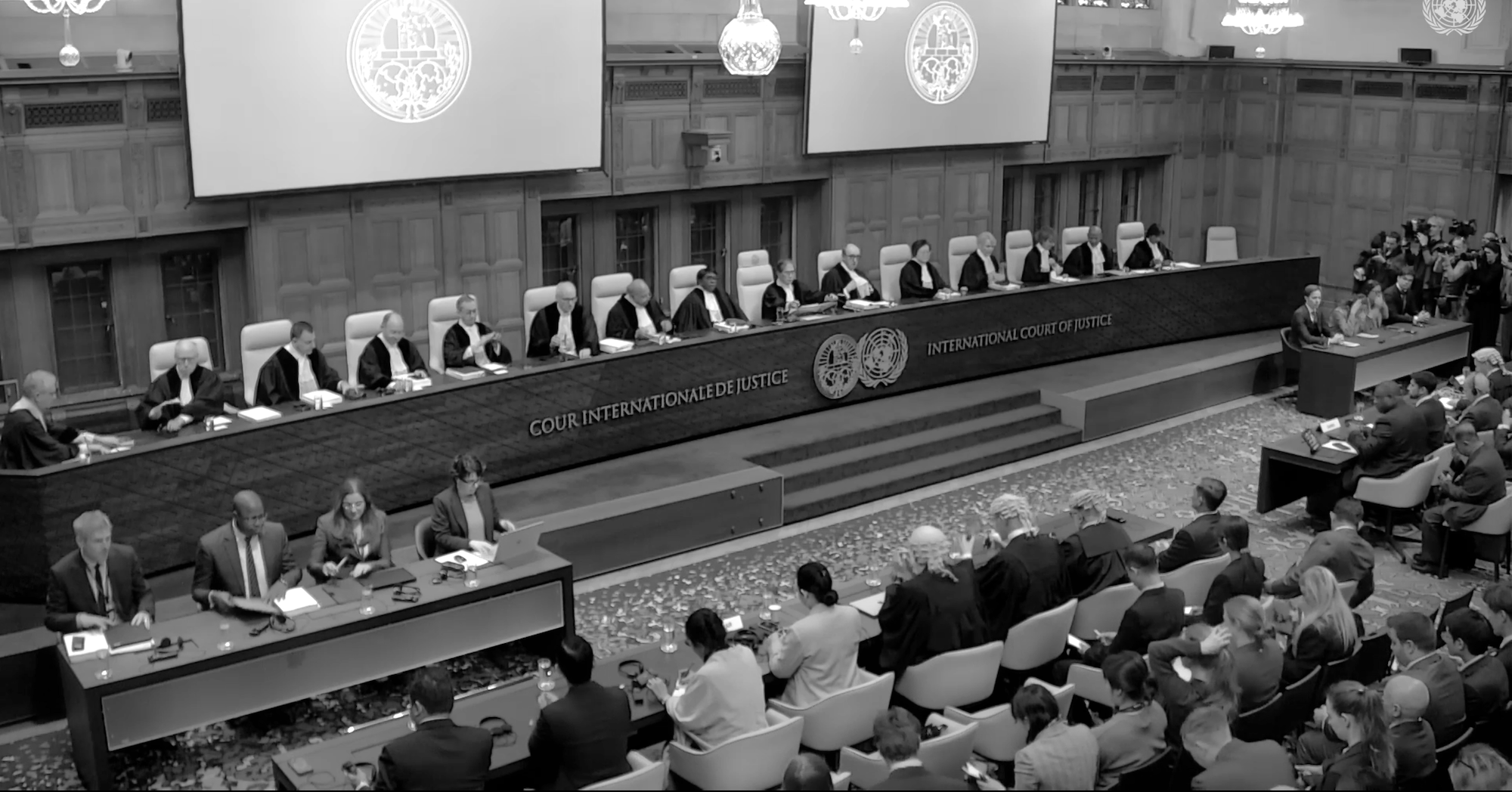
The judgment in The Gambia v. Myanmar was delivered by fifteen permanent judges together with two ad hoc judges appointed by the parties. While judges disagreed on some issues, majorities of the Court supported all of the principal findings discussed above.
The significance of the judgment lies not only in what it says about the past. It also establishes an authoritative framework for future debates about citizenship, discrimination, accountability, civilian control of the military, return, reparations, and the place of the Rohingya in Myanmar’s future.
The significance of the judgment lies not only in what it says about the past. It also establishes an authoritative framework for future debates about citizenship, discrimination, accountability, civilian control of the military, return, reparations, and the place of the Rohingya in Myanmar’s future.