Author: Coordinator
-
11 recommendations for proposed national human rights law
—
The proposed National Human Rights Law must prioritise international law and extend protection to all displaced and stateless persons. A conflict-sensitive mandate, judicial-grade independence for commissioners, and mandatory government responses to findings are essential. Without these structural reforms, the Commission risks failing Myanmar’s most marginalised populations in a contested environment.
-

Military elections fail 5 key international standards
—
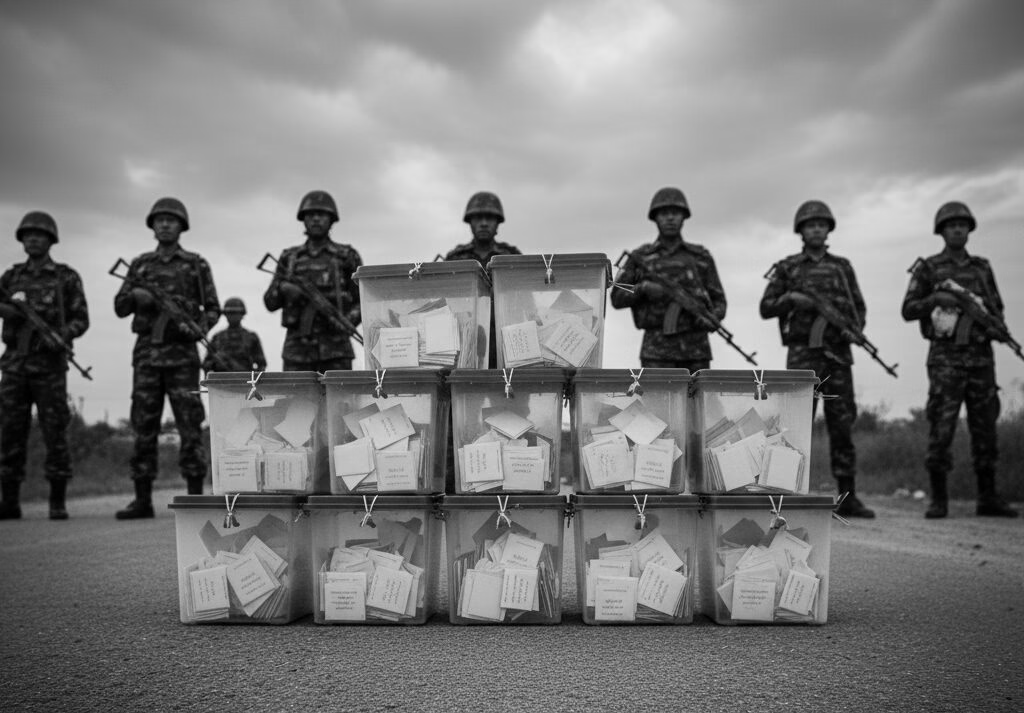
This report evaluates the 2026 Myanmar elections against international human rights law. The systematic audit across five legal pillars reveals a total collapse of international standards, characterised by State-sponsored coercion and structural disenfranchisement. This exercise was not a genuine election and the international community should make a principled rejection.
-

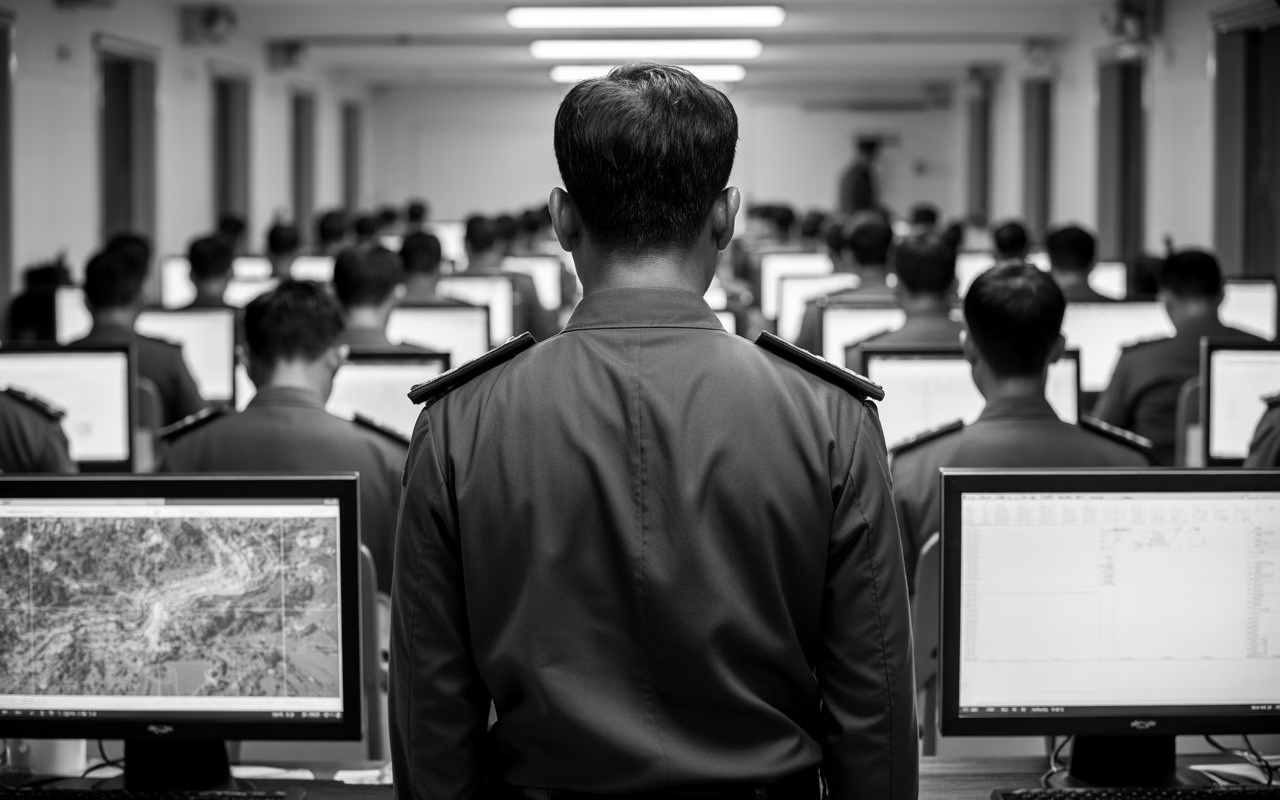
Impact of digital surveillance on civic space in Myanmar
—
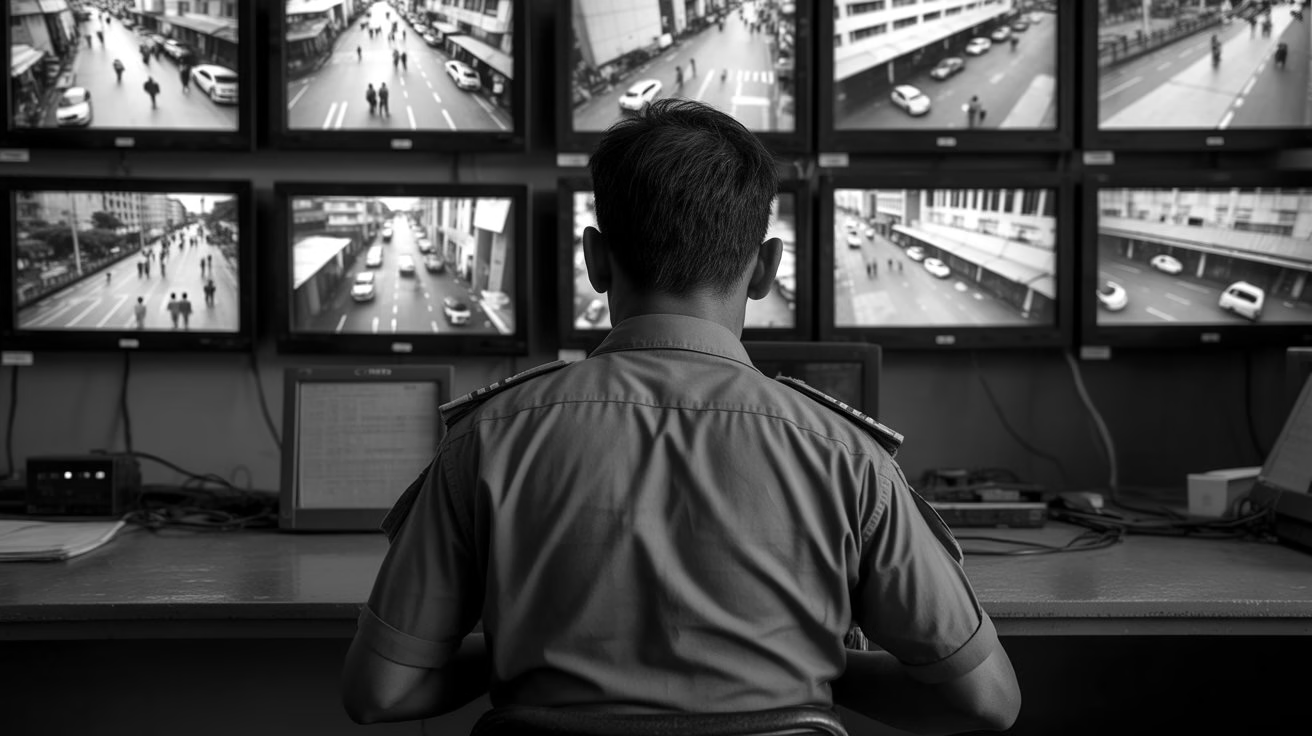
The military is weaponising surveillance to crush all civic space. AI-powered cameras and spyware are used to hunt journalists, human rights defenders, and political activists, while repressive new laws create a “rule by lawfare.” This digital dictatorship enables a high-tech war on women and criminalises the very act of seeking privacy.
-
AI undermines cultural life in Myanmar
—
The military is weaponising Artificial Intelligence to dismantle cultural rights and undermine the right to development. By automating censorship, enforcing digital exclusion, and erasing minority identities, the military has created a digital dictatorship. This submission details how AI-driven repression violates international law and demands urgent global accountability.
-
The effect of digital repression on transitional justice in Myanmar
—
Myanmar’s digital dictatorship creates significant barriers to transitional justice. While new technologies offer vital evidentiary tools, the military weaponises AI, biometric surveillance, and internet shutdowns to criminalise documentation and erase digital memory. This report to the UN calls for global evidence preservation protocols and digital restoration to protect the right to truth.
-

Civil rights approach to accountability and transitional justice in Myanmar
—
Accountability is not only about punishing physical atrocities. It requires dismantling the structural machinery of oppression. This submission to the UN’s review explains that true justice in Myanmar involves restoring the rule of law and ensuring the protection of fundamental freedoms.
-

Myanmar’s human rights challenges for 2026
—
International Human Rights Day offers an opportunity to examine fundamental rights in Myanmar and reflect on what may happen next year, in 2026. But before looking to 2026, Human Rights Myanmar’s previous predictions for 2025 are reviewed against reality.
-
UN review of “terrorism” should recognise Myanmar’s experience of State terror
—
As the UN discusses the global definition of terrorism, Myanmar offers a crucial warning. Here, the State itself is the primary perpetrator of terror, yet it weaponises the law to label pro-democracy dissenters as “terrorists”. Our submission urges the UN to recognise this reality and prevent international laws from shielding State atrocities.
-

NUG must ensure transparent, independent,and rights-respecting corruption inquiry
—
The investigation into allegations of misconduct and corruption within the Prime Minister’s Office offers a defining opportunity for the National Unity Government (NUG) to distinguish itself from the military regime.
-

Myanmar freedom on the net 2025
—
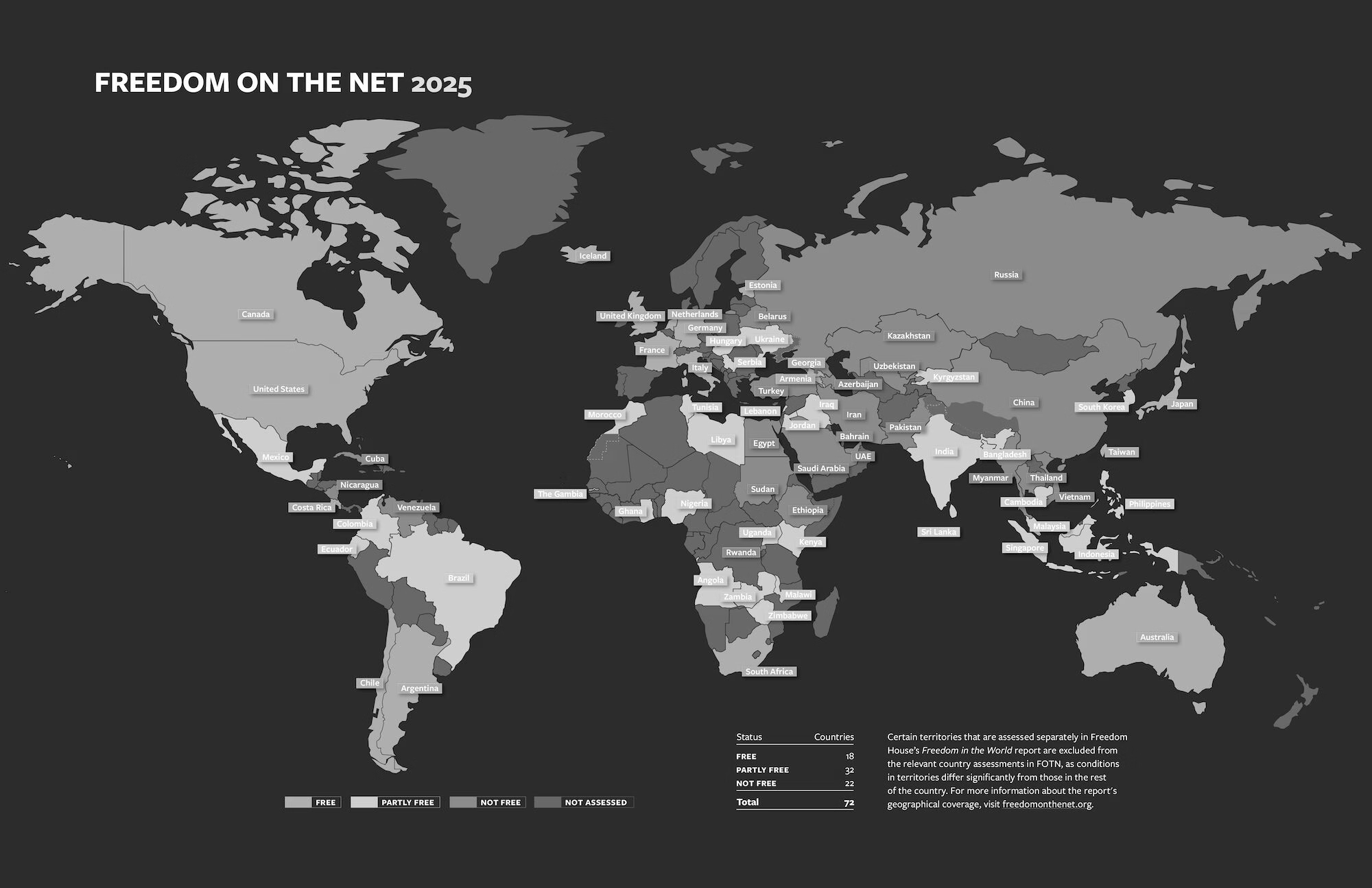
This year’s Freedom on the Net report finds that internet freedom in Myanmar remained one of the worst in the world, alongside China, with a score of 9 points out of 100. The military’s installation of advanced deep packet inspection technology and the resulting VPN block significantly worsened the situation, shifting the country from basic…
-
Gender equality, the digital space and AI in Myanmar
—
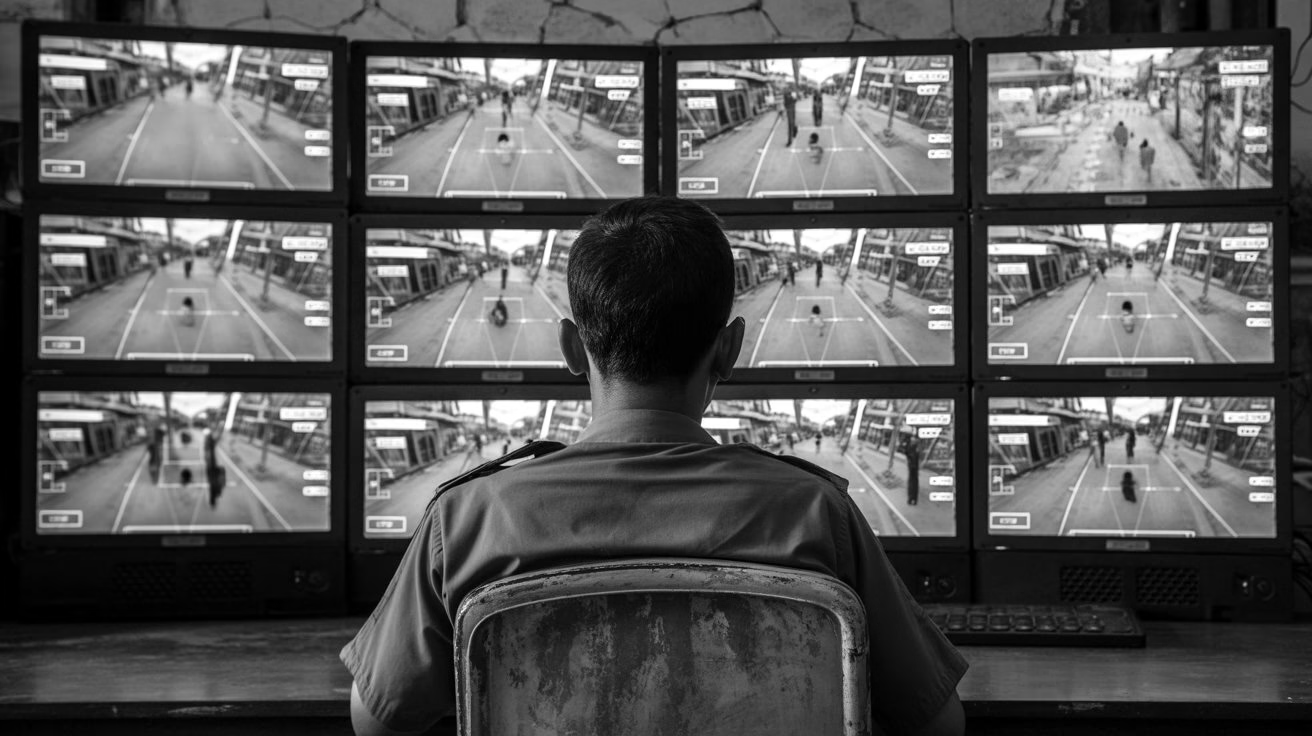
The military is waging a high-tech war on women. Pro-military online groups dox women, publishing their private data and calling for their arrest. This “dox-to-arrest” pipeline is backed by an expanding network of AI-powered facial recognition cameras, which enables the military to track women. This systematic campaign violates women’s fundamental human rights to privacy, freedom…
-

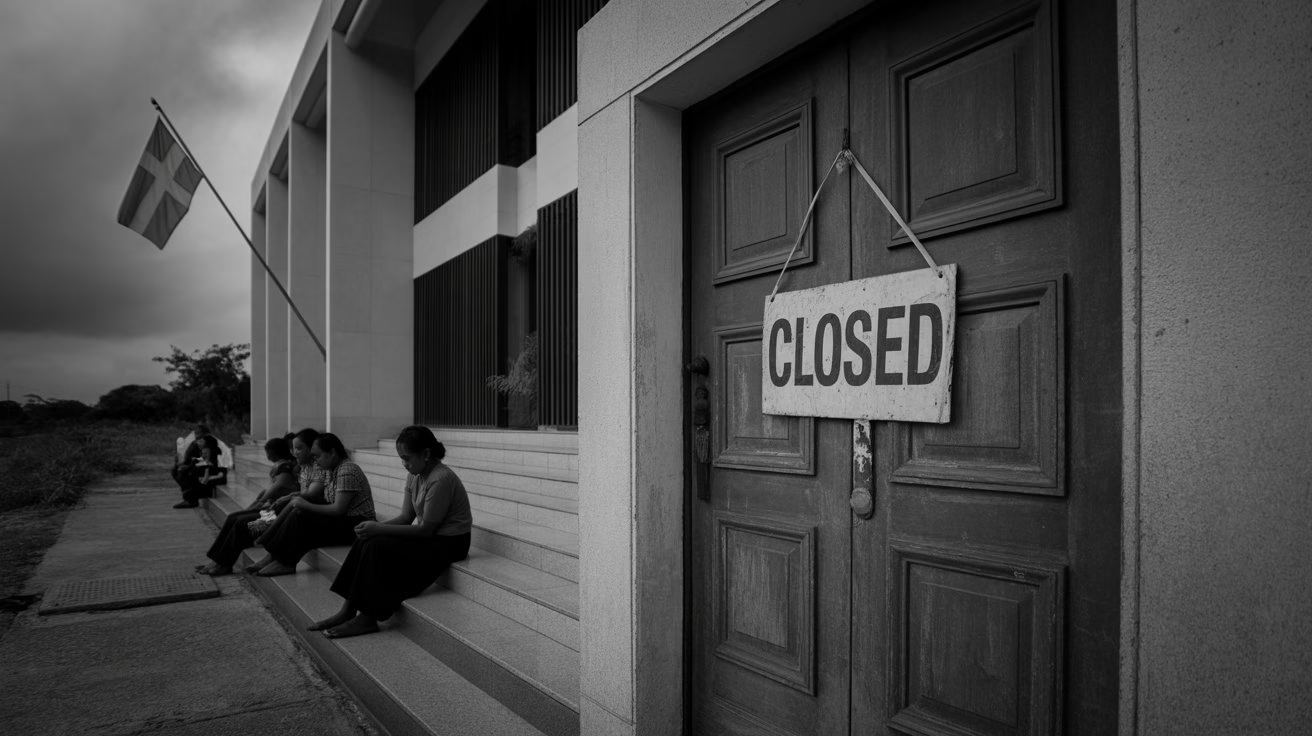
Civic aftershock: How restricting civil society obstructed Myanmar’s earthquake response
—
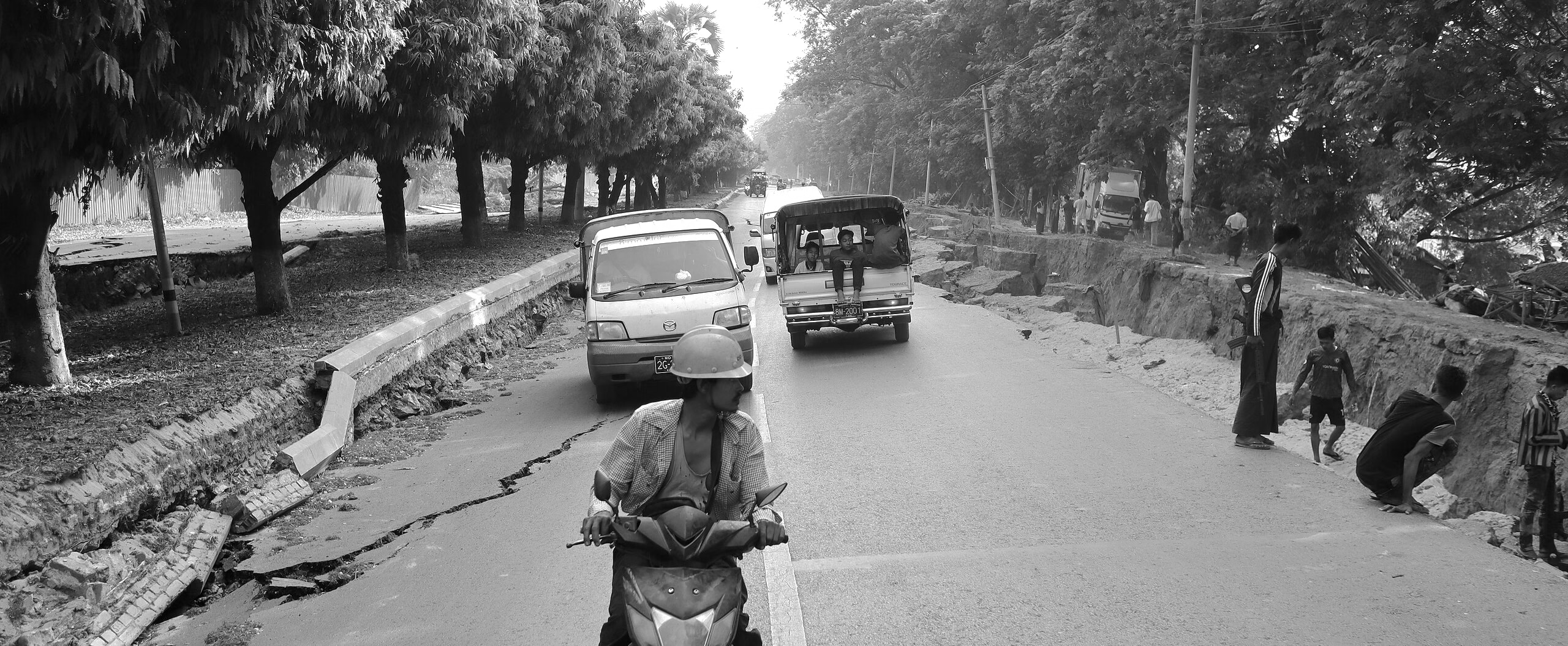
After six months of interviews and research, a new report explains how the military deliberately obstructed the 2025 earthquake response, exploiting the humanitarian crisis to suppress civic freedoms. ICNL’s comprehensive report, based on key informant interviews with earthquake respondents, details how the military weaponised laws, imposed a complex system of permissions, and blocked access to…
-
U.S. Congress Starlink investigation threatens internet access in Myanmar
—
A U.S. Congressional investigation into the use of Starlink by scam centres in Myanmar risks a blunt and disproportionate response that would further undermine the rights of a vulnerable population already suffering from repression, conflict, and poverty.
-
Predicting rights violations in Myanmar’s sham elections
—
The military’s 2025 election is a pre-scripted exercise in repression, designed to create a façade of legitimacy while violating fundamental human rights. A predictable blueprint of violations is unfolding, from eliminating political opposition and criminalising dissent to weaponising state media. The process will culminate in a fraudulent vote in a climate of fear, with ethnic…
-
Are 21,300 child deaths from foreign aid cuts a crime against humanity?
—
Of the 13 million excess deaths projected worldwide by 2030 due to the U.S. decision to cut aid, 165,000–200,000 may die in Myanmar alone—among them 21,300 children. This massive, preventable loss of life raises the urgent question: Do foreign aid cuts constitute an international atrocity crime? And if not, why does international law fail to hold donors accountable…
-
Nepal, Bangladesh, and the hard road to human rights in Myanmar
—
Recent and rapid change among Myanmar’s neighbours has brought a moment of profound hope. In Bangladesh, a youth-led uprising has led to a new government headed by a Nobel laureate civil society leader. In Nepal, a similar youth-driven movement has appointed a bold anti-corruption judge as the first woman to lead an Asian country without…
-
Sweden ends development aid to Myanmar, abandoning media and civil society
—
Sweden will end all development aid to Myanmar from 2026, following the U.S. government. This includes $2.65 million per year for media and human rights groups. The shock decision, confirmed on 11 September 2025, is a profound blow to Myanmar’s civil society, human rights defenders, and independent media, severing a final and critical lifeline of…
-

Myanmar’s repressive use of AI to counter “terrorism”
—
The military in Myanmar is engineering an artificial intelligence-powered digital dictatorship under the false pretext of national security and counter “terrorism”. This is not merely a collection of surveillance tools but a core component of the military’s campaign of repression, designed to automate and scale up atrocity crimes against the opposition.
-
Fourth draft Sagaing Constitution lacks fundamental rights
—
The fourth version of the draft Sagaing Constitution continues to mark a shift toward public participation and transparency in law-making and includes positive changes. However, significant human rights issues remain. Many essential civil and political rights are still missing, and new vague language has been introduced that could enable future violations.
-

Analysing 4 years of journalist detentions in post-coup Myanmar
—
The military detained 221 journalists from over 100 media outlets in the four years following the coup. Human Rights Myanmar assisted in the publication of ICNL’s comprehensive investigation into arrests, criminal proceedings, sentencing, and releases, highlighting specific rights violations. The report also examines the editorial positions of targeted media outlets and the distinct treatment of…